LABORATORY GUIDE
Buying retatrutide in the UK for weight loss: what to check
Published 27 October 2026 · 7 min read · View as Markdown
AT A GLANCE
Retatrutide is an investigational peptide, not an authorised UK medicine. For research-material identity, a certificate should identify the batch and show the methods and results behind any purity or mass claim; a headline percentage alone does not establish content or authenticity. Check whether molecular mass matches the declared sequence, and distinguish independent analytical evidence from a seller's unverified assertion.
Retatrutide is one of the most searched peptides in the UK and one of the most inconsistently supplied. The molecule is a 39 amino acid triple agonist at the GIP, GLP-1 and glucagon receptors, and it is sold as a lyophilised powder in sealed vials. Because it is sold as a research compound rather than a licensed medicine, the buyer carries the checking. This page sets out what to look at before paying, and what to compare between sellers.
What is actually in the vial
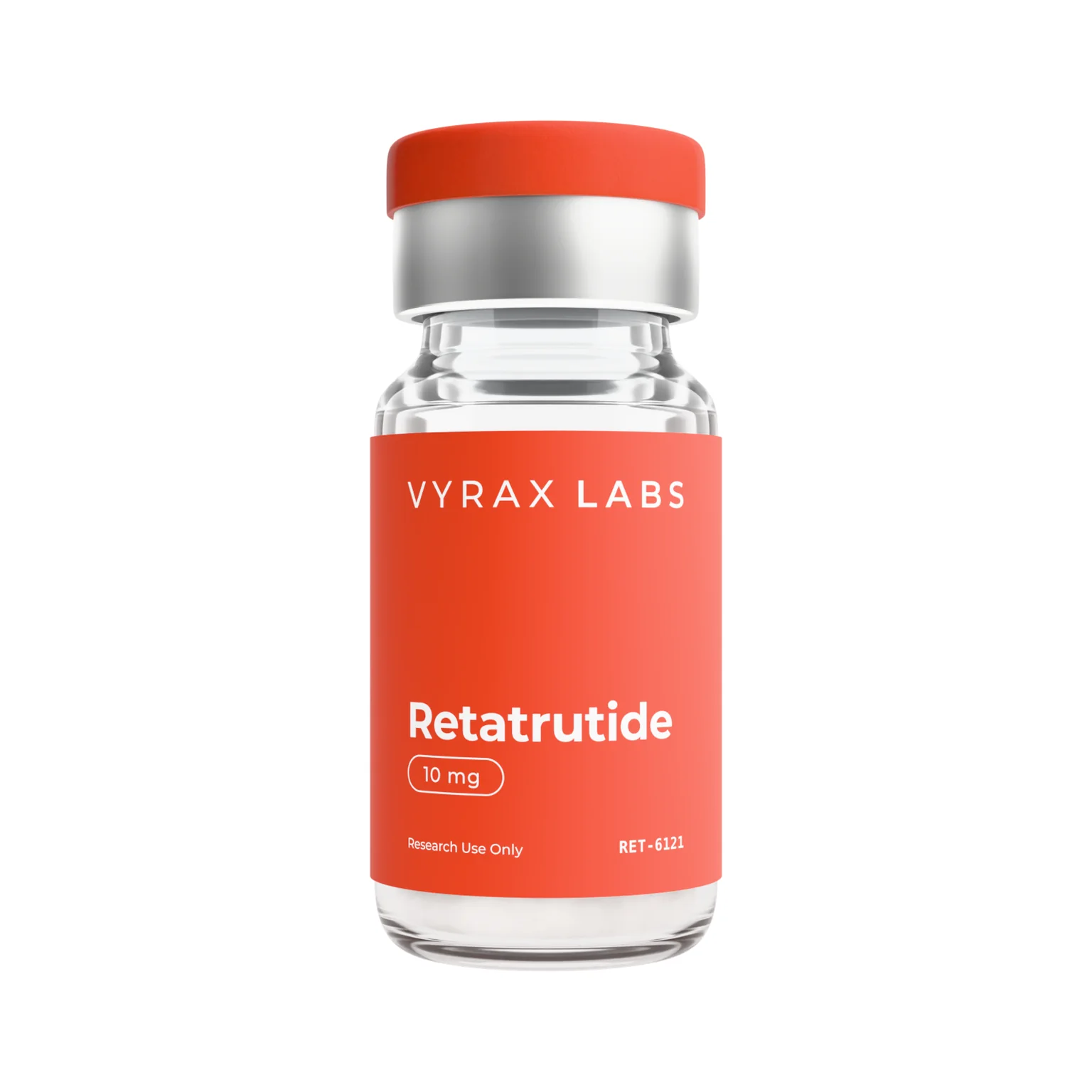
A retatrutide vial should contain a white to off-white lyophilised cake or powder and nothing else. The label should carry the compound name, the strength in milligrams, a batch number and a storage instruction. The batch number is the important one: it is the only thing that ties your vial to a laboratory report. A vial with no batch number cannot be verified by anyone, including the seller.
The theoretical molecular weight of retatrutide is approximately 4,731 Da. That figure belongs on the certificate, next to a mass spectrometry result, because it is what distinguishes the real molecule from a lookalike peptide sold under the same name.
Vial sizes and cost per milligram
Retatrutide is normally listed in 10mg, 20mg and 30mg vials. Larger vials are cheaper per milligram, but only if you will get through the material before it degrades, and only if the fill is honest. Price per milligram is the only fair comparison between sellers, so work it out rather than comparing headline prices.
| Vial | Typical UK price | Cost per mg |
|---|---|---|
| 10mg | £59.99 | £6.00 |
| 20mg | £79.99 | £4.00 |
| 30mg | £109.99 | £3.67 |
A 30mg vial is roughly 40% cheaper per milligram than a 10mg vial. That is a real saving, but it only holds if the 30mg vial actually contains 30mg. Fill is the quietest form of short-measure in this market, and it is invisible without a laboratory result for that batch.
What the certificate has to show
- The laboratory that ran the work, named, with a report or sample number you could quote back to them
- The batch number, matching the number printed on the vial you are sent
- HPLC purity as a percentage, with the chromatogram rather than the number alone
- A mass spectrometry result confirming the molecular weight near 4,731 Da
- Net peptide content, or measured fill, for the strength on the label
- The test date and the method used
If a seller shows a certificate but the batch number does not match the vial, the certificate is decoration. If the same certificate appears on every product page and has done for a year, it is being reused. Our guide to reading a certificate of analysis goes through the structure of a proper report in detail.
Red flags
- Purity quoted as a round number with no chromatogram and no method
- A certificate with no laboratory name, or one that cannot be found anywhere else
- Retatrutide sold as a liquid, pre-mixed, without stating the diluent or the concentration
- Prices far below the market with no batch documentation to explain them
- A seller who cannot say what the molecular weight of the compound is
- Vials with no batch number, or a batch number that changes between the listing and the delivery
Powder or pre-mixed liquid
Almost all retatrutide is sold as lyophilised powder because the dry form is far more stable in transit and in storage. Pre-mixed liquid is convenient but starts degrading the day it is made, and you inherit whatever diluent and concentration the seller chose. For anything you intend to keep, powder is the safer purchase.
On arrival
- Check the batch number on the vial against the certificate before opening anything
- Confirm the powder is an intact cake or free powder, not a collapsed sticky film
- Store unopened vials cold and dark, at -20°C for long term holding
- Let a cold vial reach room temperature before opening it, so moisture does not condense on the powder