LABORATORY GUIDE
Retatrutide vs tirzepatide: the third receptor and weight loss
Published 27 October 2026 · 6 min read · View as Markdown
AT A GLANCE
Tirzepatide is a dual agonist at the GIP and GLP-1 receptors; retatrutide is a triple agonist that adds the glucagon receptor, studied for energy expenditure and hepatic lipid effects. Both are 39 amino acid GIP-backbone peptides with a C20 fatty diacid, differing by about 82 Da, which mass spectrometry resolves and the eye cannot.
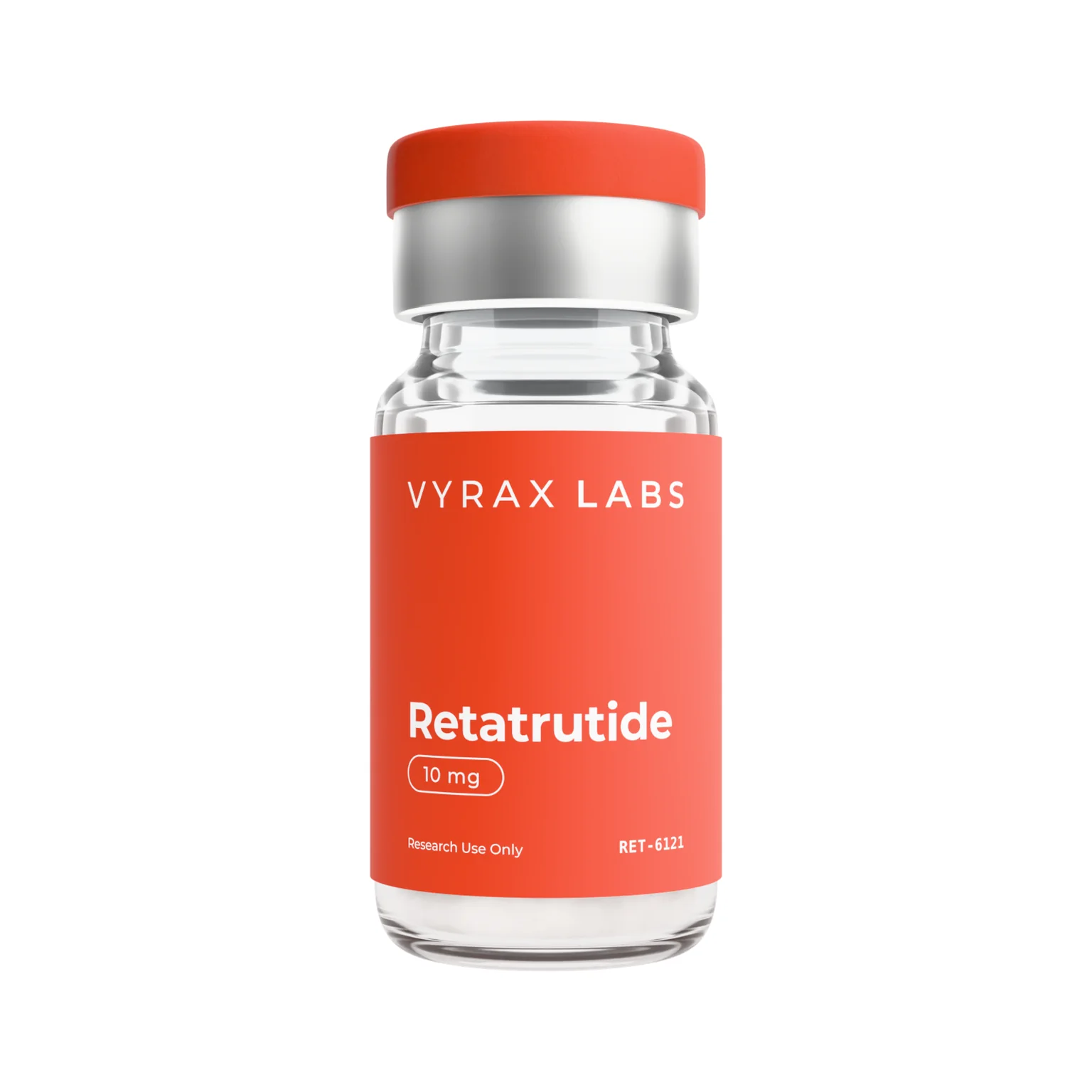
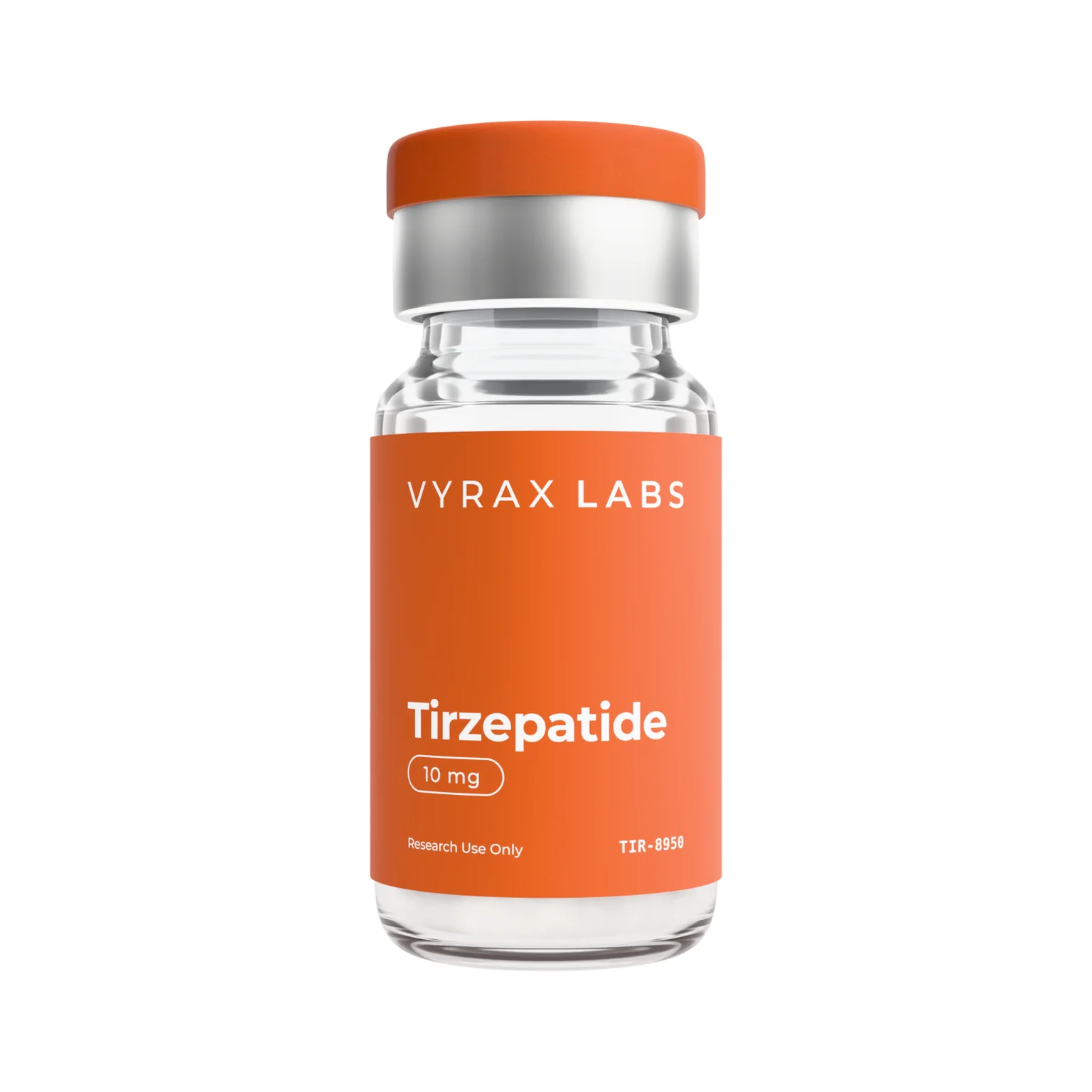
Retatrutide and tirzepatide are both engineered incretin peptides built on a GIP backbone with a fatty diacid for half-life extension. The difference that matters in the literature is one receptor: tirzepatide activates GIP and GLP-1, while retatrutide adds glucagon receptor agonism on top of both. That single addition is the whole reason the pair is studied side by side.
| Tirzepatide | Retatrutide | |
|---|---|---|
| Receptor targets | GIP and GLP-1 | GIP, GLP-1 and glucagon |
| Class | Dual agonist | Triple agonist |
| Length | 39 amino acids | 39 amino acids |
| Backbone | GIP | GIP |
| Half-life extension | C20 fatty diacid | C20 fatty diacid |
| Approx. molecular weight | 4,813 Da | 4,731 Da |
| Main research use | Combined incretin signalling | Glucagon contribution to energy balance |
Why glucagon is the interesting part
Glucagon receptor activation raises energy expenditure and drives hepatic lipid handling, which is a different lever from incretin signalling. Adding it to a dual agonist gives a compound that acts on three pathways at once, and it makes retatrutide the tool of choice when a study is asking what glucagon receptor agonism contributes beyond GIP and GLP-1. Tirzepatide cannot answer that question on its own, because it has no glucagon activity.
What the two have in common
Both are 39 amino acids long, both are built on a GIP backbone, both carry a C20 fatty diacid for albumin binding, and both are supplied as lyophilised powder. In a laboratory they are handled the same way and stored the same way. The similarity is why they work as a controlled pair: the backbone and the half-life chemistry are held constant, so the observed difference can be attributed to the receptor profile rather than to the scaffold.
Identity checks matter more here
Because the two molecules are close in size and share a backbone, a mix-up between them is plausible and hard to see. The molecular weights differ by about 82 Da, which mass spectrometry resolves easily but the eye cannot. If you are running a comparative study, confirm the reported mass on the certificate for each batch against 4,813 Da for tirzepatide and 4,731 Da for retatrutide before you start.
Choosing between them
- Studying combined incretin effects without glucagon: tirzepatide
- Studying the glucagon receptor contribution: retatrutide, with tirzepatide as the dual agonist control
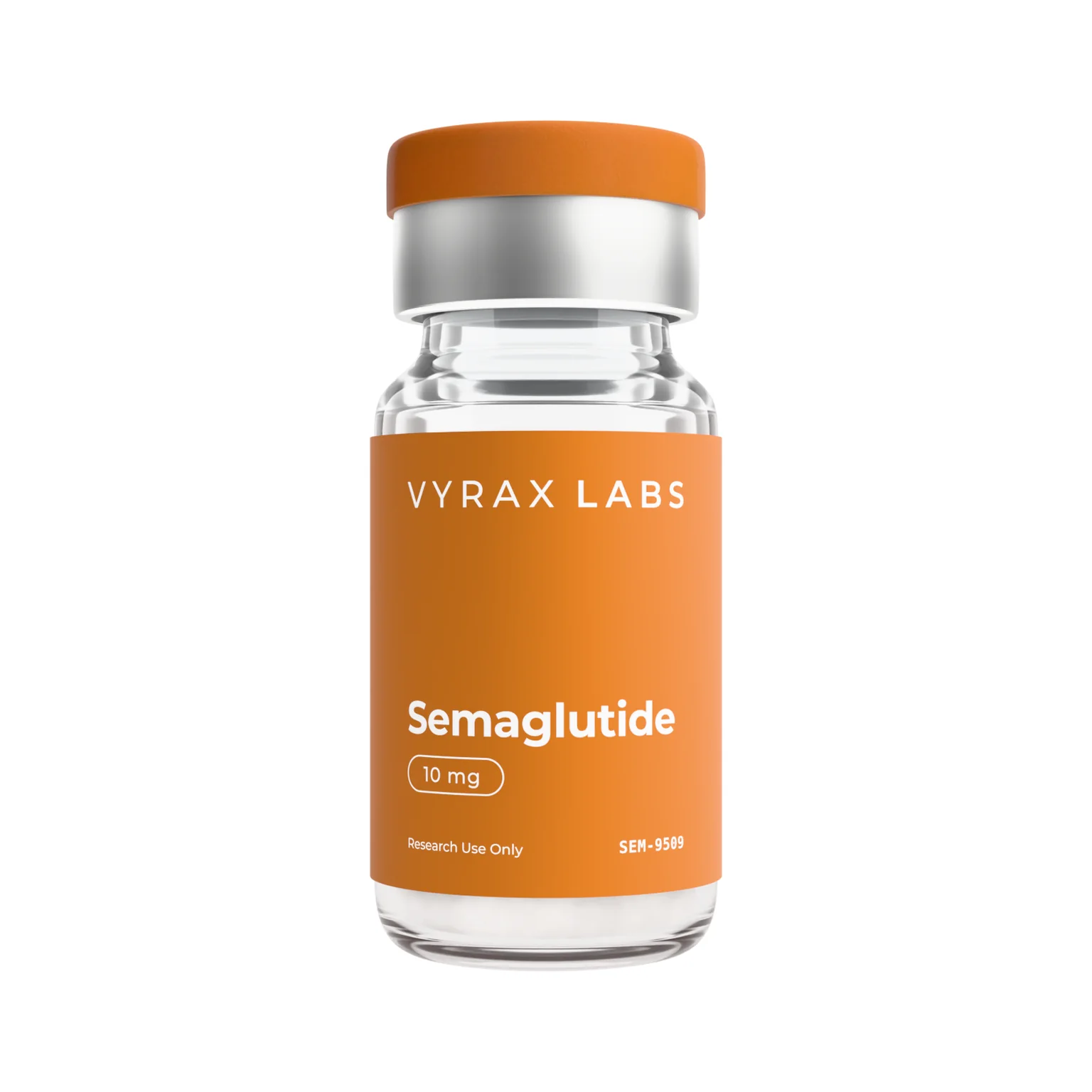
- Separating GLP-1 receptor effects from everything else: semaglutide as the selective comparator
- Running all three in one model: keep the same batch and the same reconstitution protocol across arms
Published phase 2 data exist for both compounds and phase 3 programmes are running, so the literature is growing quickly in both directions. Neither is a licensed medicine in the UK, and both are sold here as research compounds.